10 October 2016 – 190 682
Karratha, Dampier and the Burrup Peninsula

This morning we did most of the Yaburara Heritage Trail –
this gave us great views of Karratha, the terrain to the inland as far as the
Chichester Ranges, Nickol Bay and the Burrup Peninsula.
https://trailswa.com.au/trails/yaburara-heritage-trail https://karratha.wa.gov.au/yaburara-heritage-trail We also got to see some petroglyphs. We then went to the Karratha Visitor Centre to find out about the Rio Tinto tour – unfortunately they are no longer running them – we were all quite disappointed as we would have loved to see the loading facilities up close. We took the car in to have the tyre repaired and the wheels aligned and balanced while we had a wander around town – Karratha is quite a nice town and is growing quickly. The number of people who own one or more boats, and not little tiny ones, was amazing.
https://www.australiasnorthwest.com/explore/pilbara/karratha
 After lunch we drove to the NW Shelf Visitor Centre – this is on the
Burrup Peninsula and is an on shore gas processing plant.
https://www.australiasnorthwest.com/explore/pilbara/point-samson/north-west-shelf-nws-project-visitors-centre
https://www.westernaustralia.com/en/Pages/Attraction.aspx?n=North_West_Shelf_Natural_Gas_Project&pid=56b266aa2cbcbe7073ae0572&lang=en#/
The NW Shelf Project makes LPG, NPG, domestic gas and condensate and involves six large international companies working together. The information centre was very good and they had a great animation that explained from the formation of oil and gas right through to processing in an entertaining way – very well made! Hayden filled out a quiz sheet – instead of the usual sticker or lolly prize, he got given two balloons, two soft fishing lures, a water bottle and a hat! He was pretty impressed!

Our next stop was Murujuga National Park – this is a new national park and does not yet have any infrastructure.
 https://parks.dpaw.wa.gov.au/park/murujuga https://www.australiasnorthwest.com/explore/pilbara/karratha/murujuga-national-park https://www.murujuga.org.au/our-land/national-park/
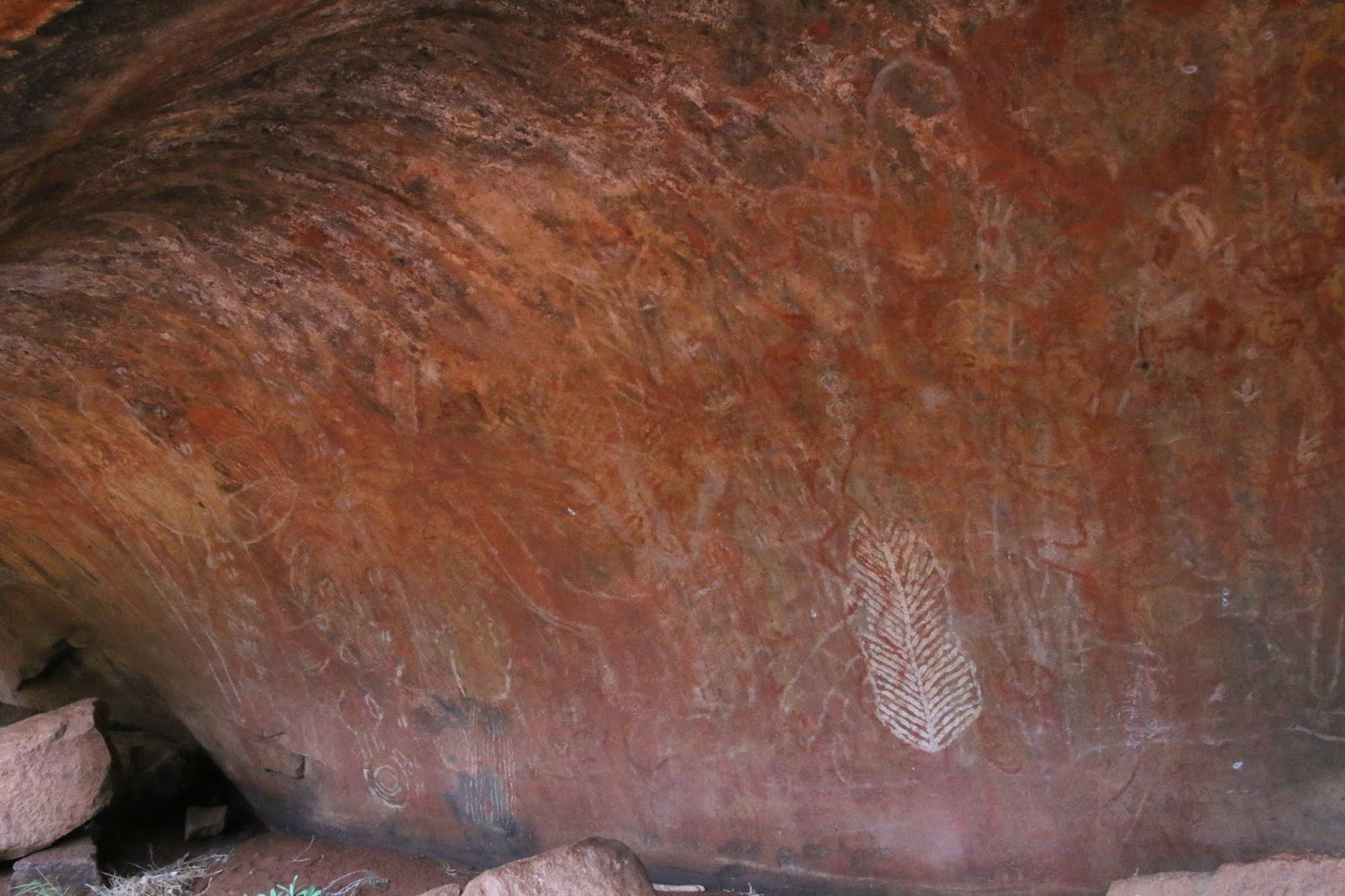
They have put some temporary signage to Deep Gorge where there are a truly amazing number of petroglyphs (rock engravings). We spent some time walking around looking at the piles of rock, finding an assortment of art.


We then drove into Dampier, quite a small town but with sporting facilities for just about everything.
https://www.australiasnorthwest.com/explore/pilbara/dampier https://www.westernaustralia.com/en/Destination/Dampier/56b266c22880253d74c4ee8c#/
We were able to look at the Rio Tinto loading facilities at East Intercourse Island and Parker Point from a distance, and also the salt loading and salt condensation ponds.
https://www.pilbaraports.com.au/Port-of-Dampier/About-the-port/Port-facilities-and-services/Rio-Tinto-Iron-Ore https://www.pilbaraports.com.au/Port-of-Dampier/About-the-port/Port-facilities-and-services/Rio-Tinto-Iron-Ore/East-Intercourse-Island
 We finished the day in Karratha by doing the
last parts of the Yaburara Heritage Trail – more great views and petroglyphs.
https://trailswa.com.au/trails/yaburara-heritage-trail https://karratha.wa.gov.au/yaburara-heritage-trail We also got to see some petroglyphs. We then went to the Karratha Visitor Centre to find out about the Rio Tinto tour – unfortunately they are no longer running them – we were all quite disappointed as we would have loved to see the loading facilities up close. We took the car in to have the tyre repaired and the wheels aligned and balanced while we had a wander around town – Karratha is quite a nice town and is growing quickly. The number of people who own one or more boats, and not little tiny ones, was amazing.
https://www.australiasnorthwest.com/explore/pilbara/karratha
 After lunch we drove to the NW Shelf Visitor Centre – this is on the
Burrup Peninsula and is an on shore gas processing plant.
https://www.australiasnorthwest.com/explore/pilbara/point-samson/north-west-shelf-nws-project-visitors-centre
https://www.westernaustralia.com/en/Pages/Attraction.aspx?n=North_West_Shelf_Natural_Gas_Project&pid=56b266aa2cbcbe7073ae0572&lang=en#/
The NW Shelf Project makes LPG, NPG, domestic gas and condensate and involves six large international companies working together. The information centre was very good and they had a great animation that explained from the formation of oil and gas right through to processing in an entertaining way – very well made! Hayden filled out a quiz sheet – instead of the usual sticker or lolly prize, he got given two balloons, two soft fishing lures, a water bottle and a hat! He was pretty impressed!


Our next stop was Murujuga National Park – this is a new national park and does not yet have any infrastructure.
 https://parks.dpaw.wa.gov.au/park/murujuga https://www.australiasnorthwest.com/explore/pilbara/karratha/murujuga-national-park https://www.murujuga.org.au/our-land/national-park/
They have put some temporary signage to Deep Gorge where there are a truly amazing number of petroglyphs (rock engravings). We spent some time walking around looking at the piles of rock, finding an assortment of art.


We then drove into Dampier, quite a small town but with sporting facilities for just about everything.
https://www.australiasnorthwest.com/explore/pilbara/dampier https://www.westernaustralia.com/en/Destination/Dampier/56b266c22880253d74c4ee8c#/
We were able to look at the Rio Tinto loading facilities at East Intercourse Island and Parker Point from a distance, and also the salt loading and salt condensation ponds.
https://www.pilbaraports.com.au/Port-of-Dampier/About-the-port/Port-facilities-and-services/Rio-Tinto-Iron-Ore https://www.pilbaraports.com.au/Port-of-Dampier/About-the-port/Port-facilities-and-services/Rio-Tinto-Iron-Ore/East-Intercourse-Island